
 It’s time to sit back, relax and enjoy a little joe …
Welcome to another rousing edition of Black Coffee, your off-beat weekly round-up of what’s been going on in the world of money and personal finance.
Well… another busy week is behind us. So with that in mind, let’s get this party started!
The last century shows a steady increase in the amount of public indebtedness. Nobody believes that governments will drag their growing interest payment burden forever. It’s obvious that, sooner or later, their debts will be liquidated – although not by payment of interest and principal according to the terms of the contract.
– Ludwig von Mises
Credits and Debits
Credit: Did you see this? According to Swiss bank UBS, there were almost 24 million US millionaires at the end of 2024. That’s a 1.5% increase over the previous year. Looking at it another way, there were 379,000 more American millionaires in 2024 than in 2023 – that means in 2024 there were roughly 1000 new millionaires being created every single day. Too bad a million bucks doesn’t guarantee a lief of luxury for anybody anymore. On the other hand, being a millionaire is nothing to sneeze at. The only question is how you choose to get there. Or not…


Debit: Meanwhile, a new poll is out and it shows that 50% of Americans are currently living paycheck to paycheck. Of those, 18% say the reason things are so tight is because they overspend on nonessentials (think: Door Dash, etc.). That being said, 59% of Americans have knowingly made a purchase they couldn’t afford. What’s more, despite half the US population admitting they live paycheck to paycheck, 88% of Americans also confess to impulse buying, with nearly 1 in 4 consumers (22%) saying they’ve spent $1000 or more on a single impulse purchase. Frankly, it’s all rather confusing – although not as confusing as this:

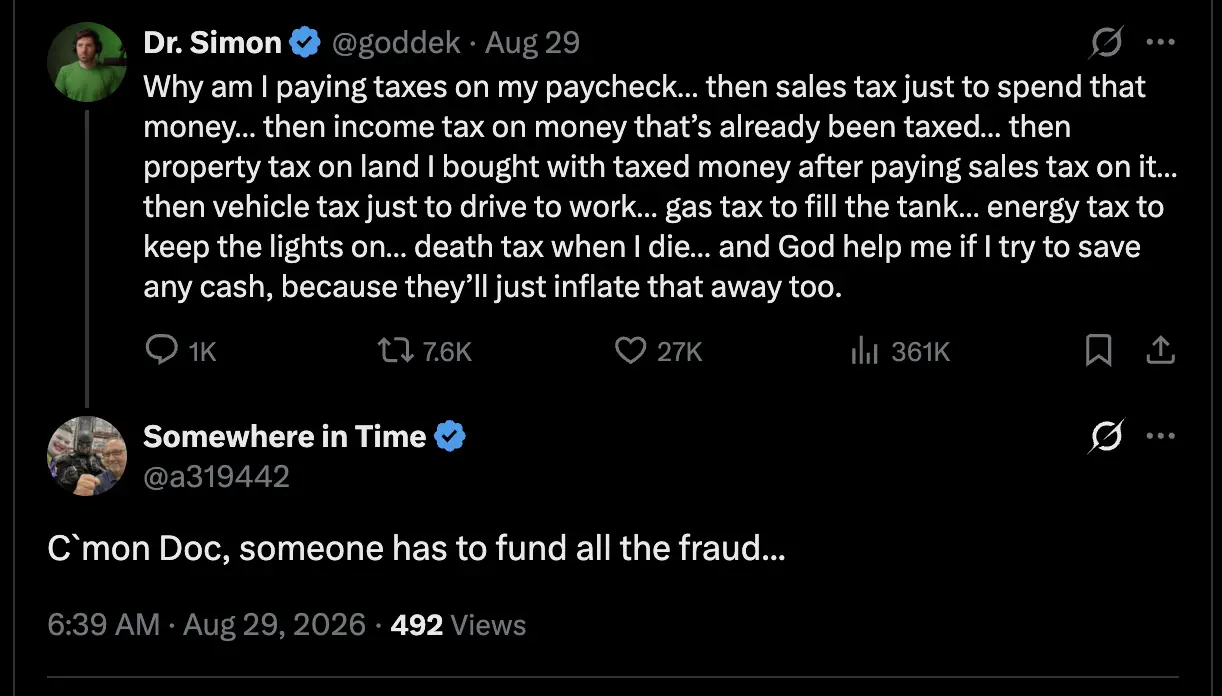
Debit: On a related note, credit card delinquencies are at a 15 year high, student loan delinquencies are at a six-year high, and auto loan delinquencies are at an all-time high. Yikes! And if you think the financial news on Main Street is more than a little bit alarming, the asset managers over on Wall Street are saying, “Hold my beer.”
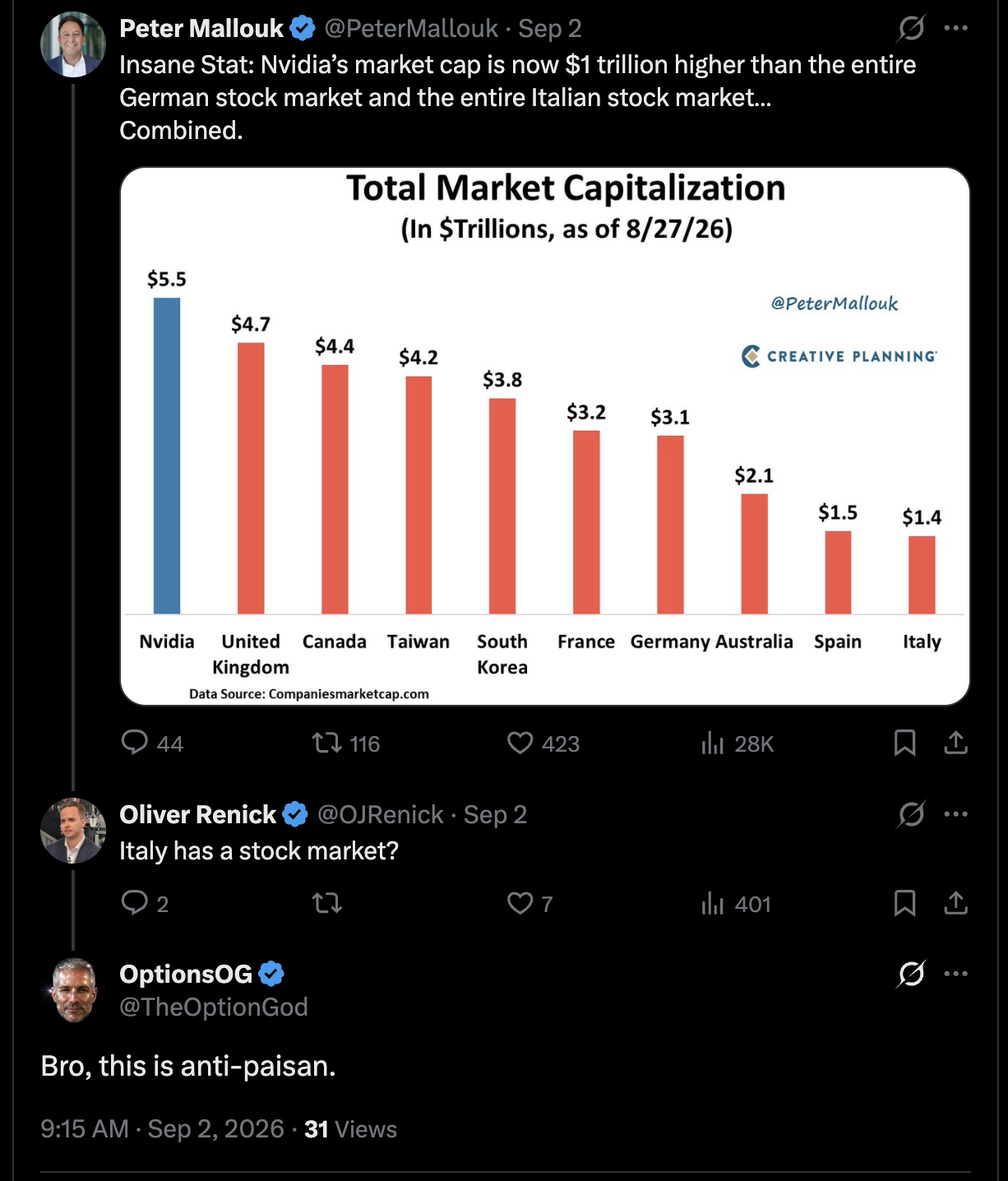
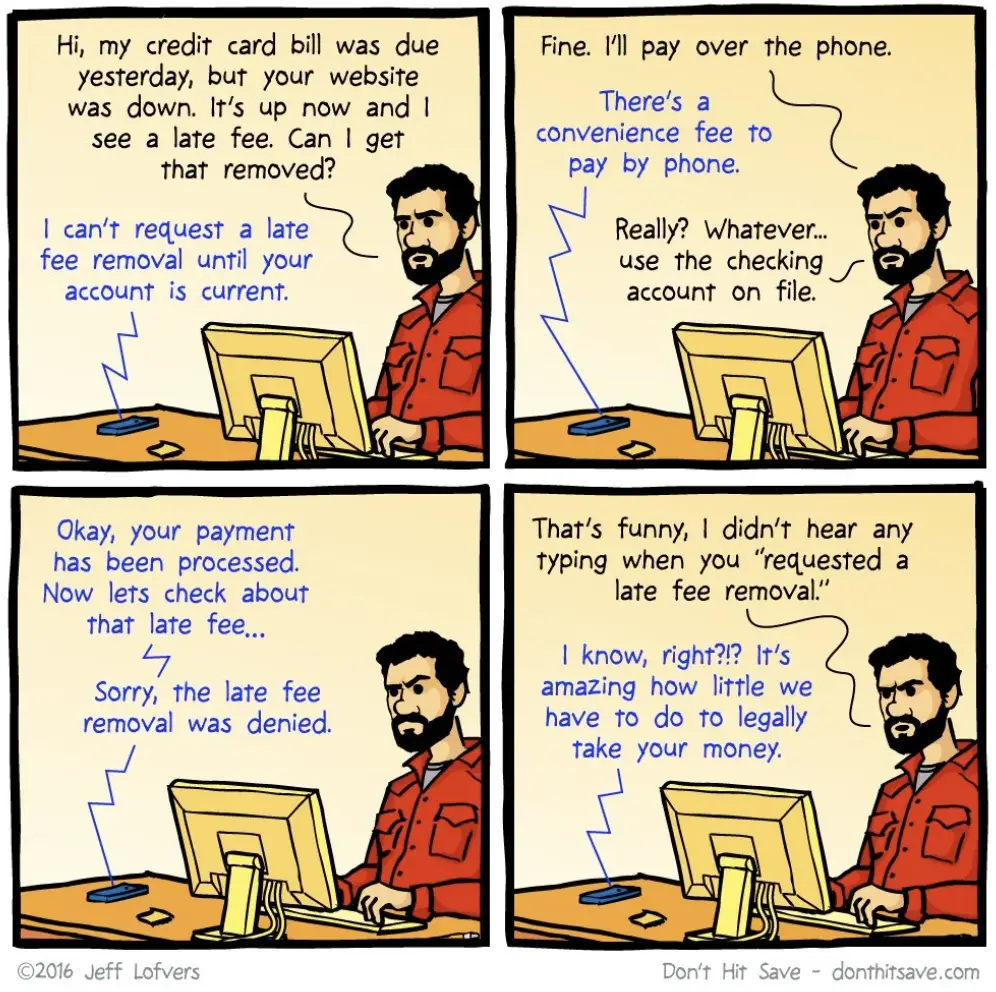
Debit: Of course, the public isn’t the only entity with credit issues; the governments have them too, with Japanese bonds and US Treasury bonds (UST) at multi-decade highs. Compounding the problem is that the cost to service US federal debt is on track to exceed $1 trillion this year. In fact, the federal debt is now so large that every quarter point increase adds approximately $95 billion in annual interest costs on the $40 trillion National Debt. Then again, nobody seems to be too worried about this in Congress since the Fed can always print those payments out of thin air. And they will. So there’s that.


Credit: Believe it or not, despite the US National Debt passing the $40 trillion milestone last month, the current administration has cut the federal workforce by 12% – despite a never-ending desperate cavalcade of exasperating legal roadblocks posted along the way. Ironically, federal spending is currently 3% higher than it was just three years ago. How can that be, you ask? Well… one of the biggest reasons is that 60% of all federal spending is mandatory. And much of that mandatory spending – think: Social Security, Medicare, Medicaid and other programs – is indexed to inflation. At the same time, other means of reducing deficits – think: tariffs – are also being fought tooth and nail by the same suspects. But in the end, it’s all theater…


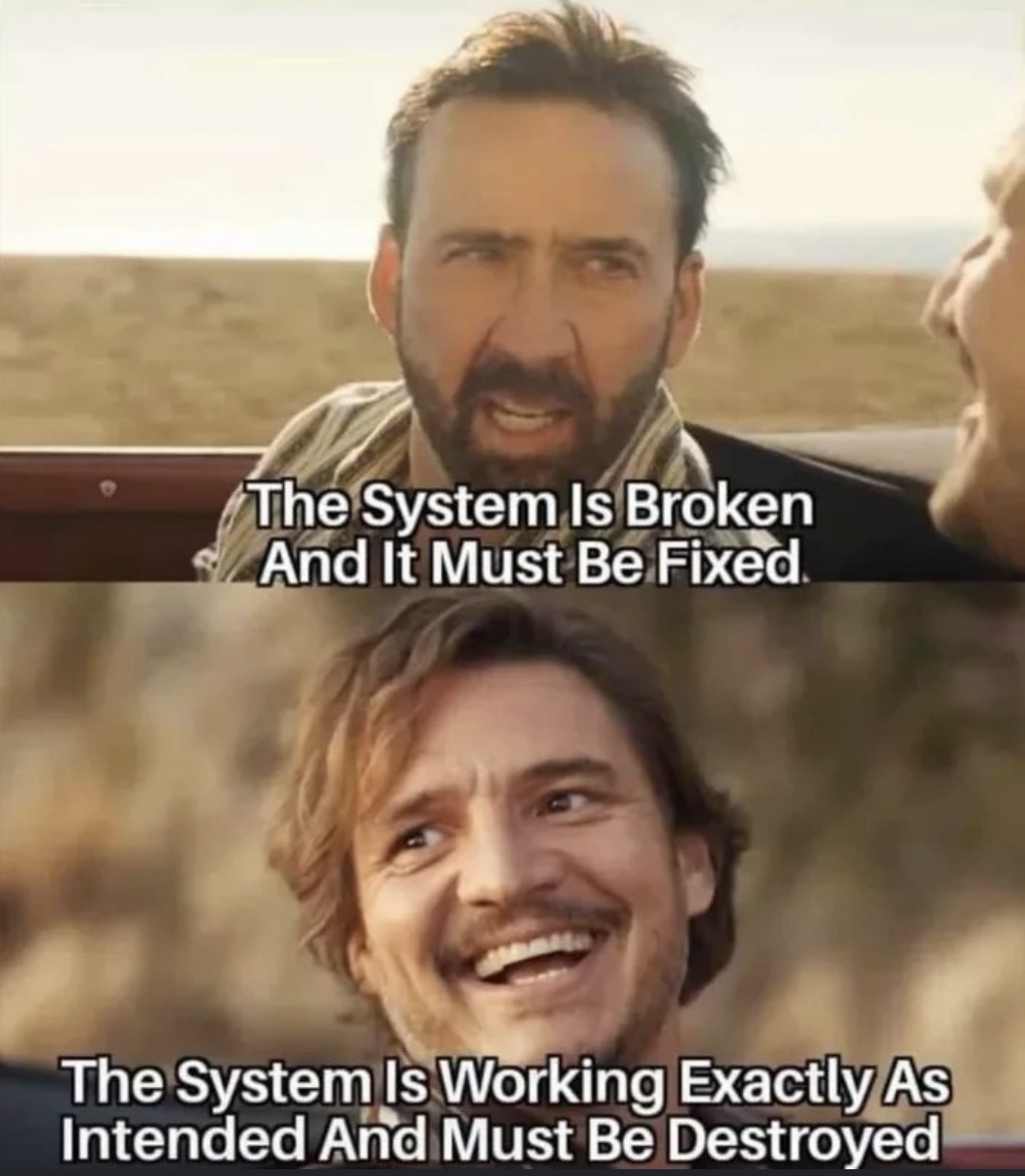
Debit: By the way, another financial problem plaguing not only the US government, but the citizenry too, is the fiat monetary system, which was officially born in 1971 when the US dollar’s (USD) anchor to gold was broken, allows politicians to spend with impunity. A fact that is so obvious, everybody can see it. Well… okay. Almost everybody:
Debit: We know what some of you are thinking: But, Len, the US owes the money to itself! First off, a significant portion of the National Debt is held by foreigners. Secondly, simply writing off that debt isn’t an option either because you can’t just let one side of the government’s balance sheet disappear without affecting the other side. So if the debt is written down to zero, so too will all assets financed by this debt – which would almost certainly result in at least a 90% collapse (in real terms) of the current stock, bond and property market bubbles. This is the Achilles’ heel of our debt-based monetary system, where our paper “wealth” is literally somebody else’s “debt.” In other words: It’s a big con game – and, we’re the marks.
Credit: Unfortunately, nothing is going to change until a monetary system implosion forces things to change. As macro analyst Brandon Smith points out: “The reason fiscal reform is impossible is because our modern (US) government is designed to perpetuate itself; it is designed to grow forever. This is accomplished through the bureaucracy, which is the real power base within American politics. Most people do not understand that political leaders come and go, but the bureaucracy is forever.” Well… it is until the current debt-based fiat monetary system finally implodes, which may be sooner than most people think…

Credit: Not coincidentally, after 50 years, gold is now re-entering the US monetary system architecture. Think about it: Ever since Nixon closed the gold window in 1971, the US has treated gold as a barbarous relic, keeping it on the books at a measly $42.22 an ounce – despite the free market valuing it much higher. Throughout this period the USD ran the world on faith and US Treasury bonds (UST) alone. And while gold was a hedge you owned as a hedge against currency debasement – it wasn’t part of the plumbing. But that framing is now visibly cracking, with the US Treasury Secretary fielding questions about physical gold audits and reserve valuation on prime-time television – something that would have been unthinkable just 10 years ago.
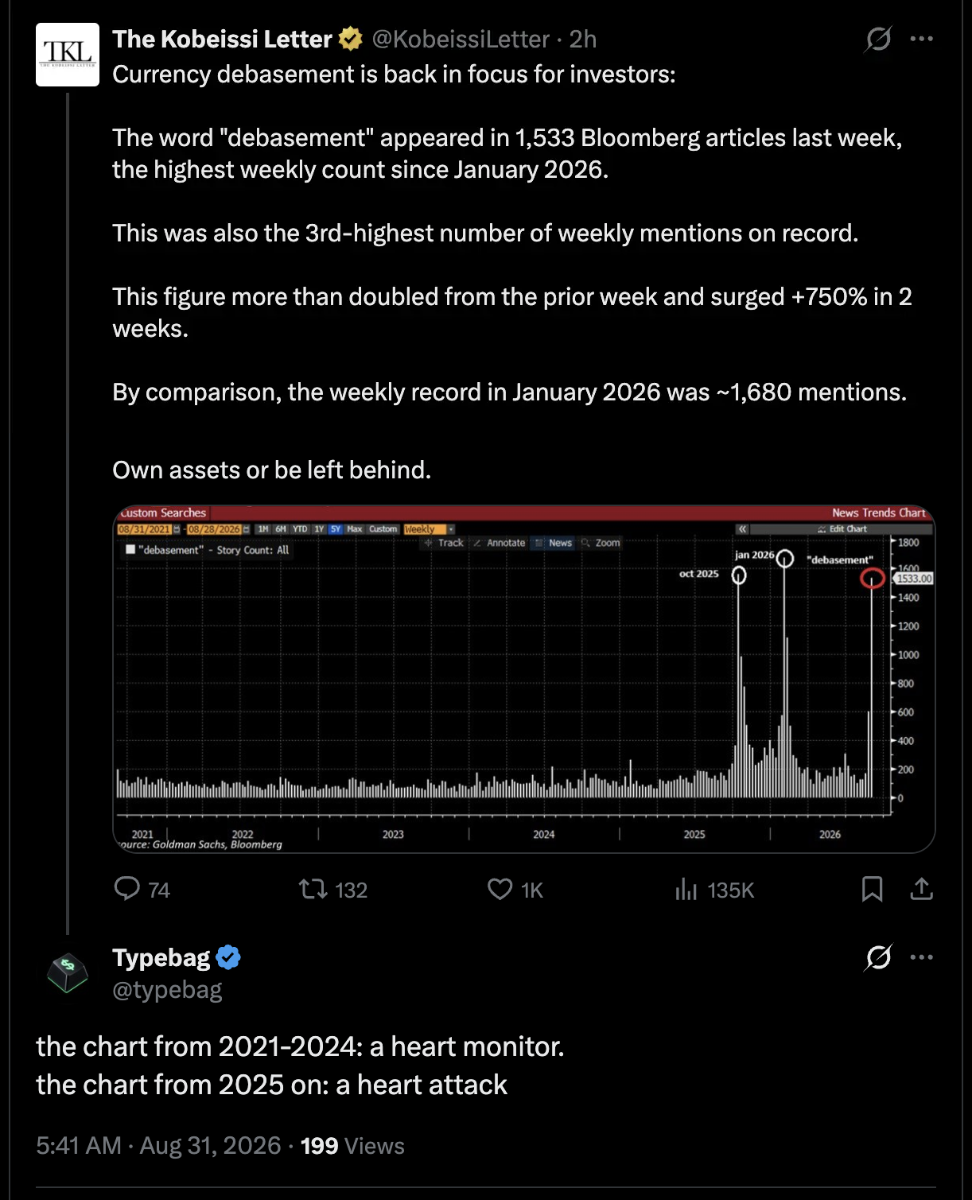

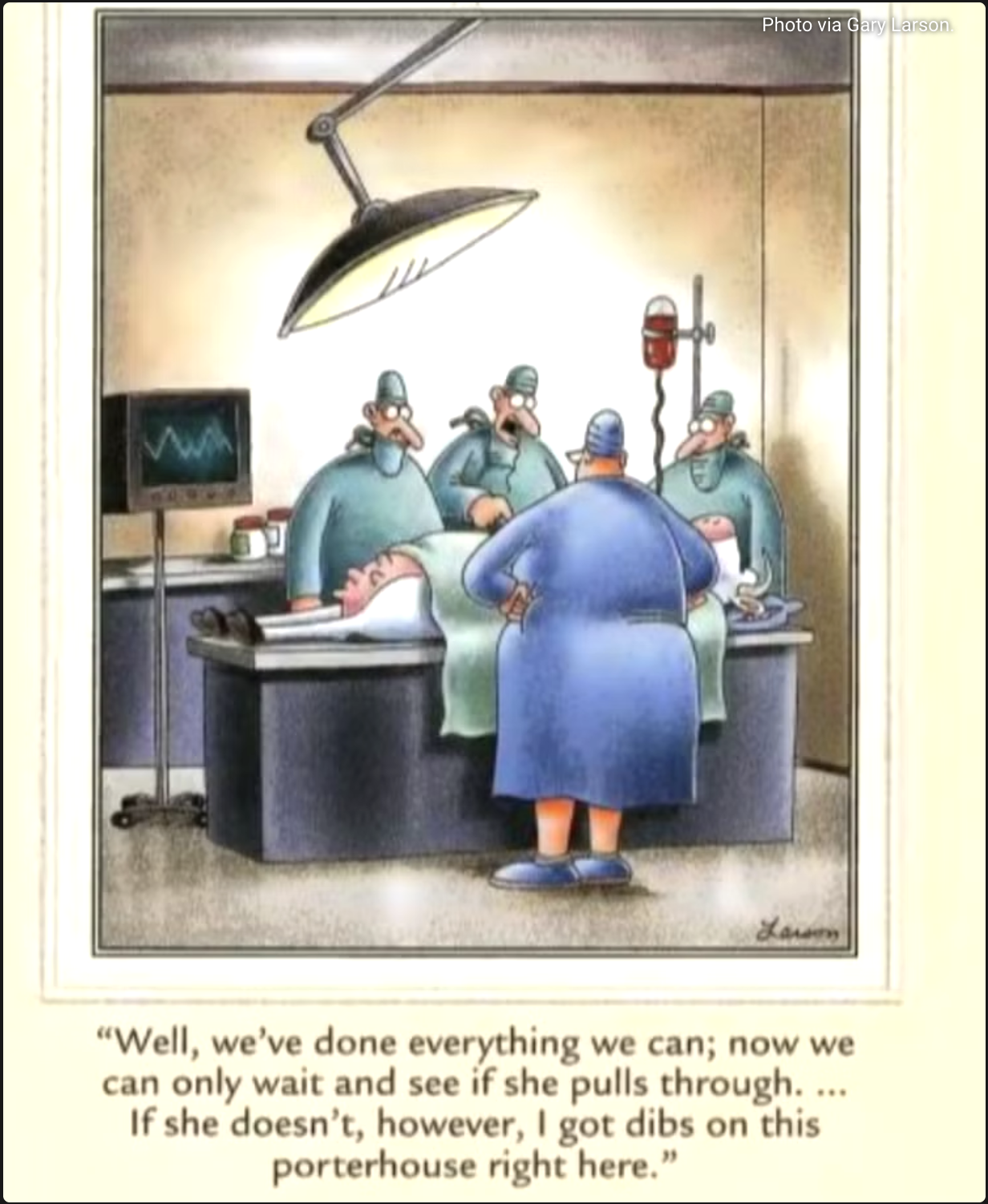
Gary Larson – The Far Side
Credit: We’ll end this week with some wisdom from sagacious macro analyst Franklin Sanders: “Remember that every Fed hack has only one goal: Get to the end of the day without the monetary system exploding.” That’s really all they care about, because in a system where bank credit is money, the system is always ready to explode. But there haven’t been any adults at the Fed since at least Nixon’s time – and there ain’t any adults there today – just bureaucrats hoping the system won’t ignite before the day ends. That’s another reason to buy a little gold and silver.” Indeed it is. At least for those who want to insure the purchasing power of their retirement savings that they’ve worked so hard for over many years.
By the Numbers
What is the pre-tax income a household with two working adults and two kids needs to live comfortably in every US state? Well… a recent study came up with their answer based on the familiar 50/30/20 budget: 50% for necessities, 30% for discretionary spending, and 20% for savings or other goals. With that in mind, here are the five states where it costs the most – and least – for a married couple to raise a family with two kids. Frankly, we’re taking these numbers with a heaping serving of salt, as they seem to be ridiculously inflated. (At least right now.):
50 Mississippi (minimum pre-tax income required: $187,533)
49 Kentucky ($194,854)
48 Arkansas ($195,437)
47 Tennessee ($197,267)
46 Louisiana ($197,933)
5 New Jersey ($295,110)
4 Connecticut ($298,189)
3 California ($302,682)
2 Hawaii ($313,165)
1 Massachusetts ($329,555)
Source: Visual Capitalist
Last Week’s Poll Results
How often do you pay extra for home delivery services like Door Dash?
- Never 89%
- Rarely 9 %
- Often 2%
More than 2800 Len Penzo dot Com readers responded to last week’s question and it turns out that a whopping 98% of you have either never used Door Dash – or only on rare occasion. We don’t find that surprising at all considering that it is one of the most expensive modern luxury conveniences out there. I’ve used it once. And after paying more than $70 (including tip) for a bucket of lukewarm chicken and a few sides, I swore I would never do it again.
If you have a question you’d like me to ask the readers here, send it to me at Len@LenPenzo.com and be sure to put “Question of the Week” in the subject line.
The Question of the Week
Useless News: Eye Exam
A Polish immigrant who recently earned his American citizenship papers went to the DMV to apply for a driver’s license.
Of course, once he got there, the first thing he had to do was take the obligatory eye test.
After a long wait in line, the newly-minted Polish-American walked up to the counter. Wasting no time, the gruff clerk pointed to a card that was on the wall behind her with the typical mess of jumbled letters:
P V L T Z Y . . . C Z W I K S N O S T A C Z
“Can you read that?” the clerk asked.
“Read it?” the Polish immigrant replied, “I know the guy!”
(h/t: Bemused-Confused)
Squirrel Cam
Good things come to those who wait ….
.
Buy Me a Coffee? Thank You!
For the best reading experience, I present all of my fresh Black Coffee posts without ads. If you enjoyed this week’s column, buy me a coffee! (Dunkin’ Donuts; not Starbucks.) Thank you so much!
.
More Useless News
Hey, while you’re here, please don’t forget to:
1. Subscribe to my weekly Len Penzo dot Com Newsletter!
2. Make sure you follow me on follow me on X. And last, but not least…
3. Please support this website by purchasing my book! Thank you!!!! 😊
(The Best of) Letters, I Get Letters
Every week I feature the most interesting question or comment — assuming I get one, that is. And folks who are lucky enough to have the only question in the mailbag get their letter highlighted here whether it’s interesting or not! You can reach out to me at: Len@LenPenzo.com
After reading about RD Blakeslee’s experience working on Ford’s 8N farm tractor assembly line way back in 1949, Barbara R. shared this:
We have a 1949 8N. Her name is Daisybelle!

If you enjoyed this edition of Black Coffee and found it to be informative, please forward it to your friends and family. Thank you! 😀
I’m Len Penzo and I approved this message.
Photo Credit: public domain
I’m with you, Len. Those supposed “minimum” income numbers are nuts. I live in Hawaii and I am getting along just fine on far less than $313,000 a year. Not even close.
Thanks for the first-hand reporting, Albert. I suspected as much!
Hi Len and thanks for a good read this weekend. As we approach the mid-terms, I truly don’t understand how ANYONE would consider voting for a socialist candidate, considering their goals (Medicare for all, “free” child-care, “free” college, rent control, etc.) will add even MORE debt since all those things will be funded by tax dollars. Scary times, for sure, and I’m glad we’re debt-free!
BTW, we raised 2 kids in Delaware on salaries (1 full time, 1 part time) totaling 35k to 40k/yr in the 90s & 2000s! We watched every penny and NEVER had Starbucks, etc., but bills were paid on time and we never went hungry! Priorities… 🙂
Enjoy your Labor Day!
Priorities indeed, Lauren! There are so many people out there who would be surprised to learn just how much less they truly need to live on if they would only learn to curtail their discretionary spending.
The socialist boogeyman is always present, as is corrupt Govt officials and political system.
I live in a country that has free medical coverage with no premiums, and no co-pays. It costs the ultimate payer (Citizen through taxation) 50% of what is paid for in the USA medical system, with better health outcomes. Meds are covered as are all hospital stays and all doctor visits. Everything. Remember, this costs 50% of the private US system. (new hospital where I live)
We are now hiring hundreds of US doctors every year, plus nurses, and nurse practitioners as they flee the for profit system. Just hired away several hundred research heads as well.
Our pension plan is fully paid for and financially secure.
Our rent increases are tied to the cost of living….,and yes I am also a landlord.
I retired at 57 (blue collar guy) and my wife at 55. We started collecting our CPP at age 60, and Old Age pension at 65. We don’t do debt and that is the main reason for our security
Total Govt debt is far less than US per GDP.
This is how Canada protected the pension system (our version of social security).
Accelerated Hikes: Combined employer-employee contribution rates were sharply raised from 5.85% in 1997 to a steady-state rate of 9.9% by 2003. By forcing workers and employers to overcontribute relative to immediate payouts, the government generated a multi-billion-dollar surplus to serve as a massive reserve fund.
Creation of the CPP Investment Board (CPPIB)Independent Management: The government established the Canada Pension Plan Investment Board (CPPIB) in 1997. It operates as an independent Crown corporation at arm’s length from political interference.
Driven Investing: Rather than continuing to lend surplus funds to provincial governments at low federal bond rates, the CPPIB was mandated to invest the reserve fund into global financial markets, including equities and real estate, to maximize compound returns.
3. Modest Benefit Adjustments & Cost CuttingTightened Outlays: The growth rate of future benefits was slightly trimmed, and rules surrounding disability and survivor benefits were tightened to rein in administrative costs.
Current Seniors: These cuts did not affect individuals who were already retired or over the age of 65 as of December 31, 1997, and basic benefits remained fully indexed to inflation. Canada’s Chief Actuary consistently verifies that the base CPP remains financially solvent and fully sustainable for at least the next 75 years
I collect same pension and it receives a COLA every year depending on inflation rate.
All it takes is letting actuarial math decide the policies. Then, the political will to implement change. It’s just straight math and the will to take corruption and political interference out of Govt policies.
Well… we’re going to have to disagree to disagree. It’s not a boogeyman – it’s simply reality. History has shown that socialism rarely lives up to its promises. Yes, it can work in nations with small populations and massive natural resources for export (the Scandinavian nations are the prime example of that), but most of the time it fails, or is substandard.
Socialized medicine isn’t “free.” It’s paid for by heavy taxation. It also results in long waits for what are considered common procedures with minimal to zero wait time here in the US (i.e., ultra sounds, CAT scans and other specialized testing). It’s also well-documented that there are also long waits in Canada for many types of surgeries considered routine here in the US, and cancer treatments – which explains why 15% of Canadian citizens ultimately end up coming to the US for medical treatment. Compare that to 2% of US citizens who go to Canada for their medical needs.
Until Obamacare entered the picture here in the US (increasing government involvement in our healthcare system) young people (under 50) could purchase catastrophic healthcare policies for ~$20 a month. Although their terms varied, they typically paid medical expenses that exceeded $5000. O-care proponents argued it would result in lower costs and faster service – not surprisingly, it failed on both counts. But that’s what happens when you promise a finite service to everybody at reduced cost (or for “free”); you get longer wait times. You also get a vicious cycle that results in fewer people wanting to become doctors and nurses because their pay is artificially suppressed in order to keep costs down, further exacerbating wait times. Quality also suffers too.