
 It’s time to sit back, relax and enjoy a little joe …
Welcome to another rousing edition of Black Coffee, your off-beat weekly round-up of what’s been going on in the world of money and personal finance.
I’ve got another busy weekend ahead of me, so let’s get right to this week’s commentary…
From the Great Depression, to the stagflation ’70s, to the Great Financial Crisis of 2008, to the current housing bubble, every economic downturn over the past century can be traced to the Fed flooding the economy with easy money, leading to a misallocation of resources and an artificial ‘boom’ followed by a recession or depression when the bubble bursts.
– Ron Paul
Credits and Debits
Credit: Did you see this? Apparently, a growing number of people who are struggling to keep their head above water are now managing their budgets with an old money-management trick called “cash stuffing” where, each month, they convert their take-home income into cash and then divide the money into labeled envelopes for specific spending categories like groceries, bills, and savings. The goal is to spend no more than that cash you’ve set aside for each category. At the same time, cash stuffing also prevents credit card debt and stops impulse buying. That being said, we wonder how many “cash stuffers” decided to include an envelope for their retirement savings…
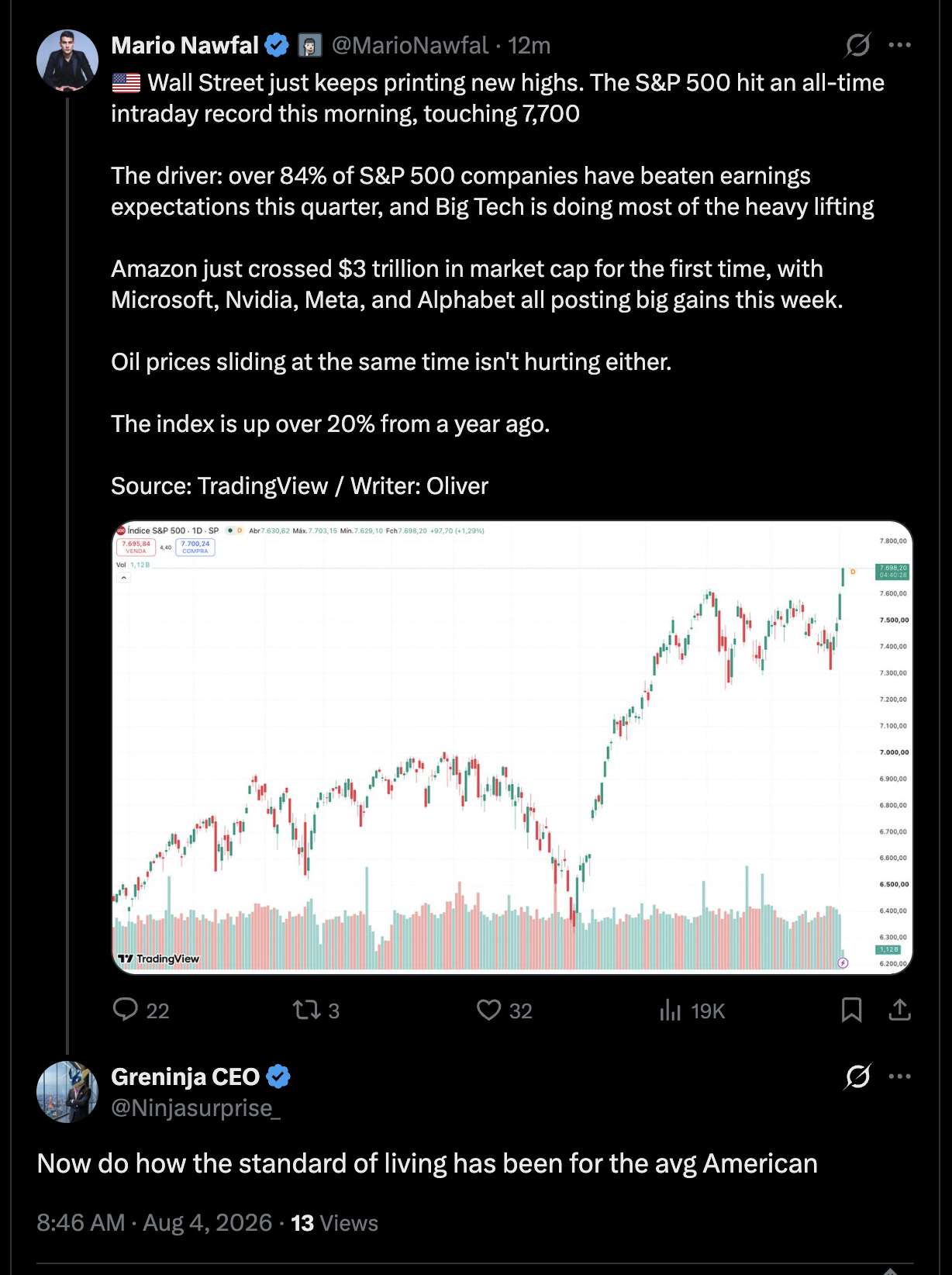

Debit: So… with a growing number of household managers trying new budgeting gimmicks to limit their financial red ink, perhaps it shouldn’t be a surprise that a new survey of 2000 people found that a majority of Americans say the cost of living is the worst they can remember. In fact, 5 in 9 said the cost of living is the worst they have ever experienced, while slightly more than 1 in 4 said it’s bad, but they can also remember worse times. On the other hand, just 8% described the cost of living as “not bad.” In the meantime, some of you may want to consider this…

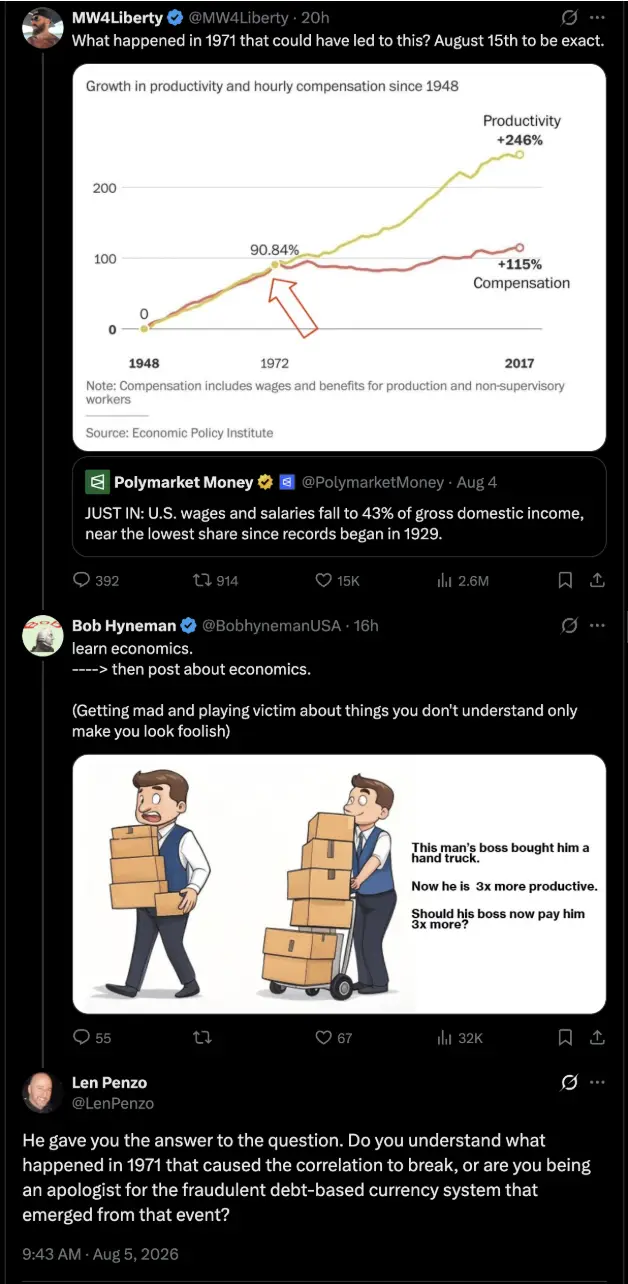

Debit: On a related note, Congress is looking at imposing a cost of living adjustment (COLA) cap that would limit the annual US dollar (USD) increase of high-benefit recipients. The proposal that was first considered 40 years ago, but never implemented. The proposed flat-rate COLA would cut the SS shortfall in half by setting the COLA received by a beneficiary at the 20th percentile of the benefit range; it’s a move that effectively creates a COLA cap with a COLA floor at the same level. The good news is: Doing so would boost SS benefits for the lowest-quintile beneficiaries by 13%. The bad news is it also slowly reduces the purchasing power of all top-quartile beneficiaries by roughly 19% over a 30-year period. Oh, and speaking of top-quartile beneficiaries…


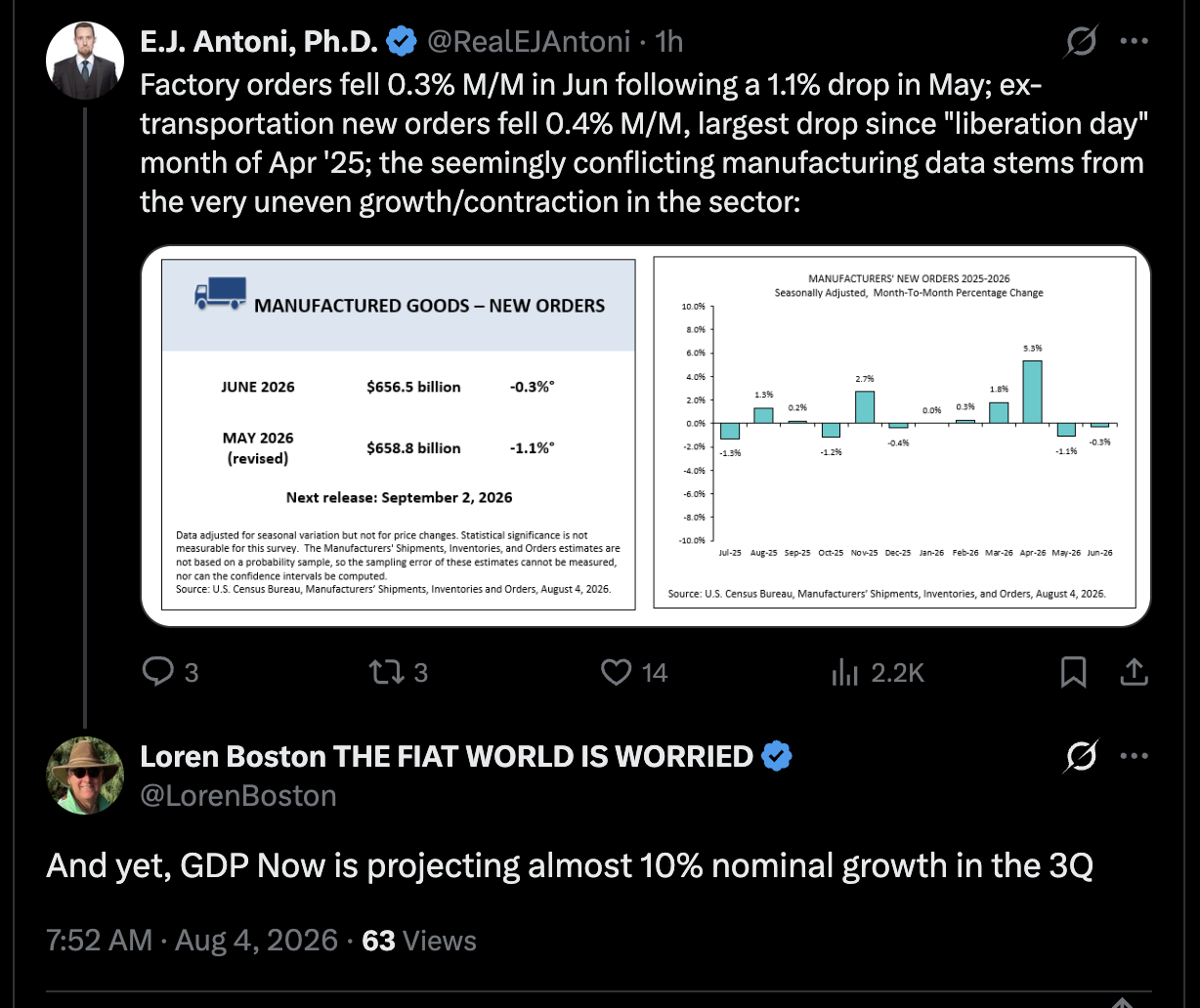
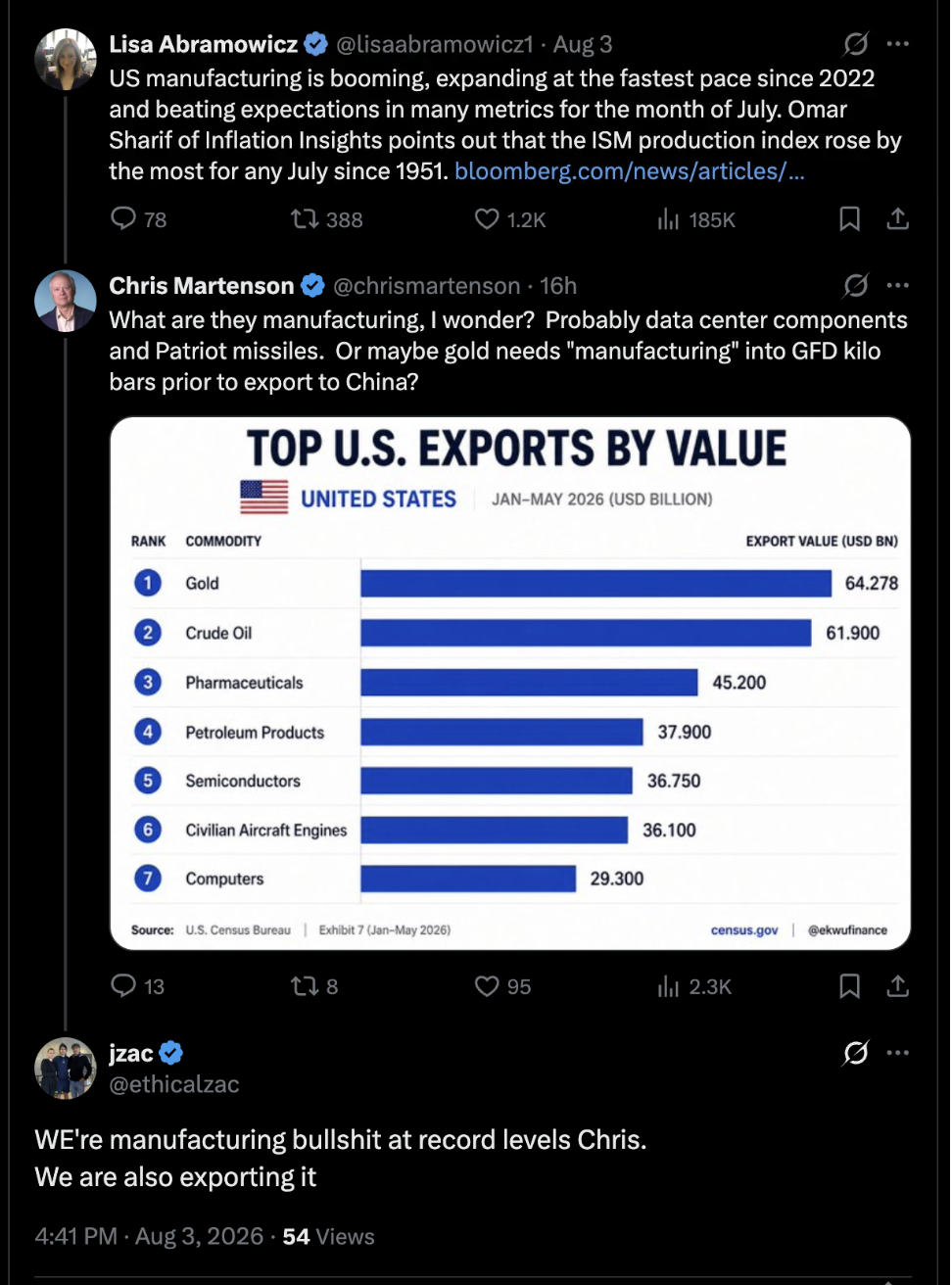
Credit: In other news, after decades of decline, the National Association of Manufacturers (NAM) reports that American manufacturing has turned toward modest growth and factories returning from overseas thanks to new investments spurred by a reduction in federal government red tape. The removal of bureaucratic road blocks has also been bolstered with corporate tax incentives that have led to new manufacturing investments that are currently underway in all 50 states. The trouble is, it takes time to build new factories – or take them out of mothballs – and get them up to speed. In many cases, the process can take several years. Just don’t tell that to the Fed bureaucrats who publish their “GDP Now” forecasts every week…
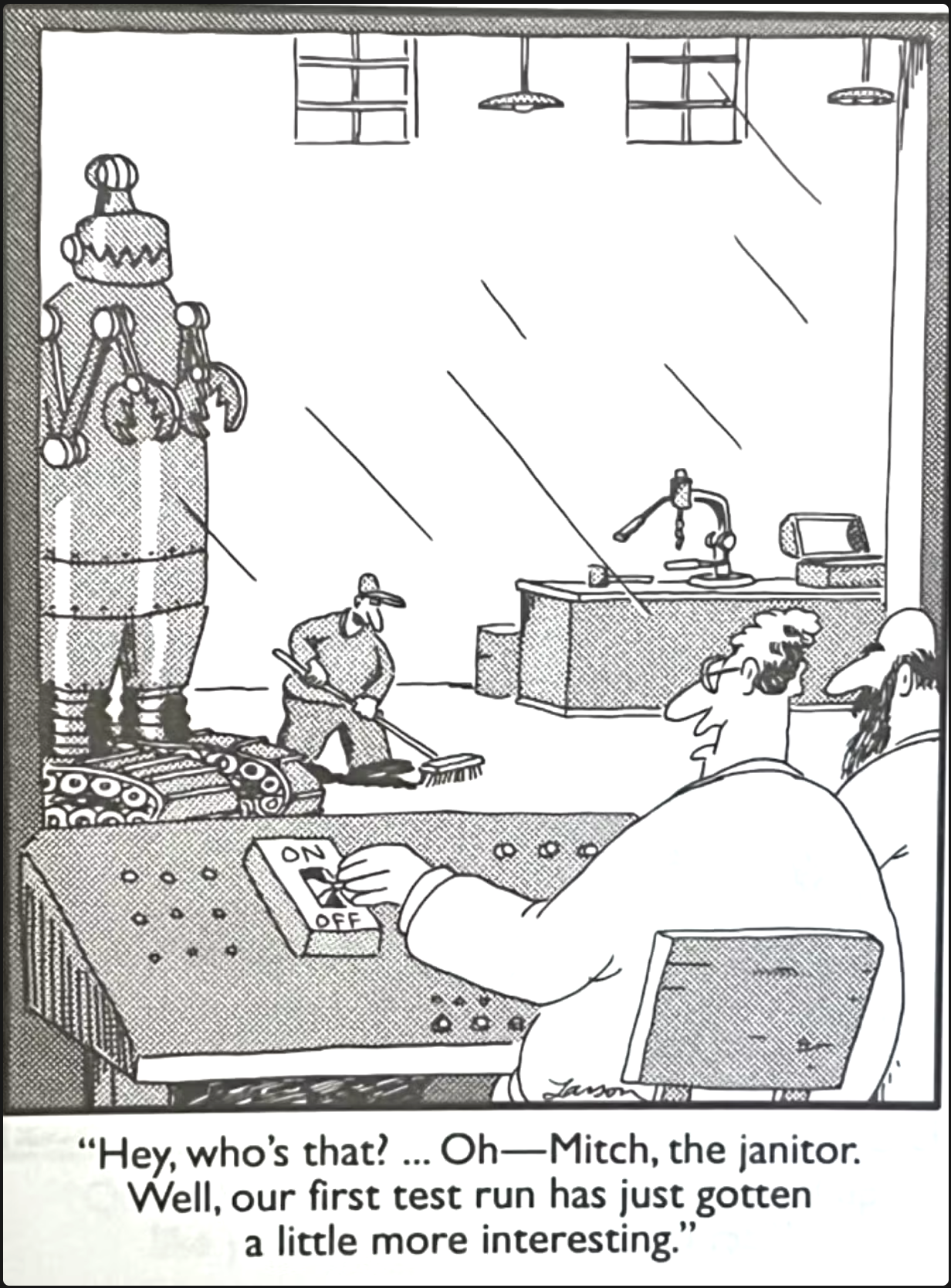
Gary Larson – The Far Side
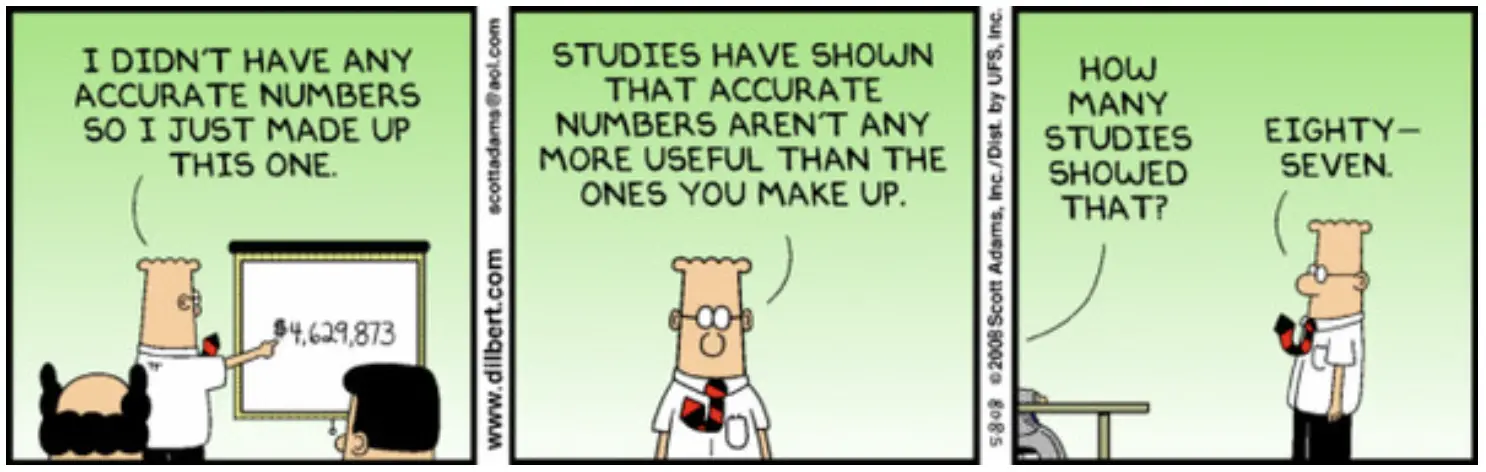
Debit: Indeed, while the US industrial base on-shoring trend is positive, domestic manufacturing growth remains distinctly modest. In fact, NAM also notes that while American manufacturers added 3000 jobs in June, manufacturing employment has been in decline over the past few years and is slightly below pre-pandemic levels. So there’s that. As usual, it’s hard to discern from the official data what is actually happening anymore.
Scott Adams – Dilbert
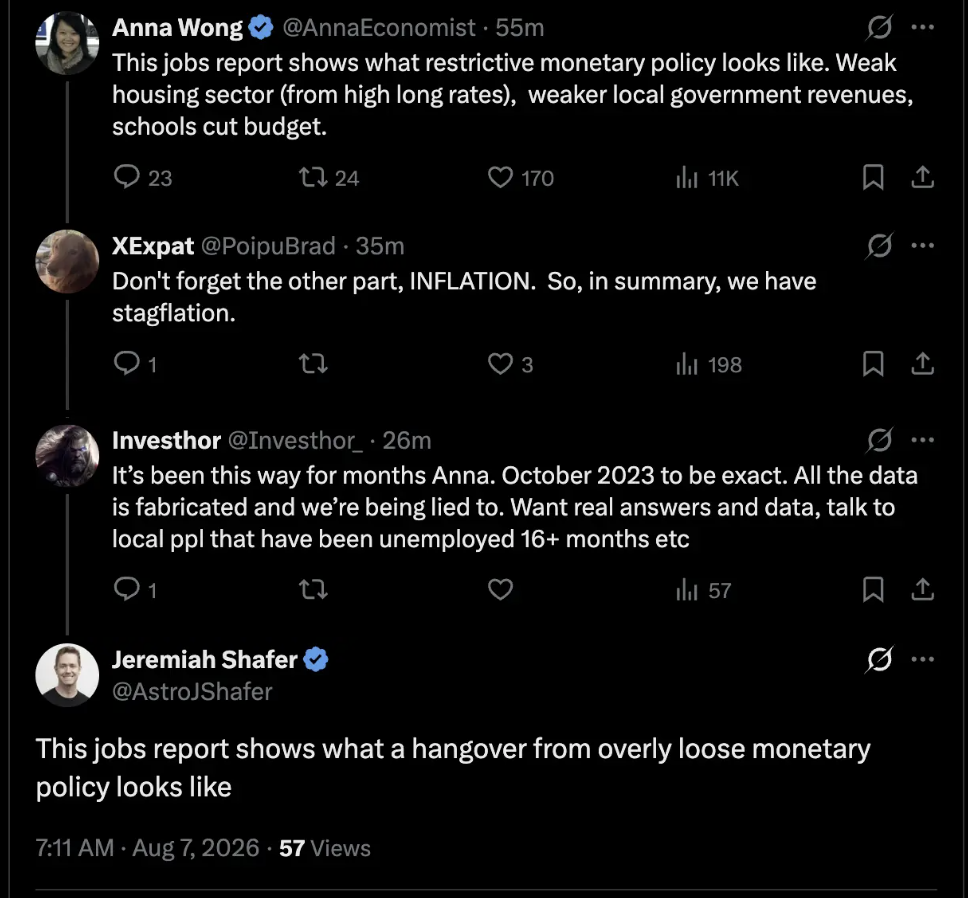
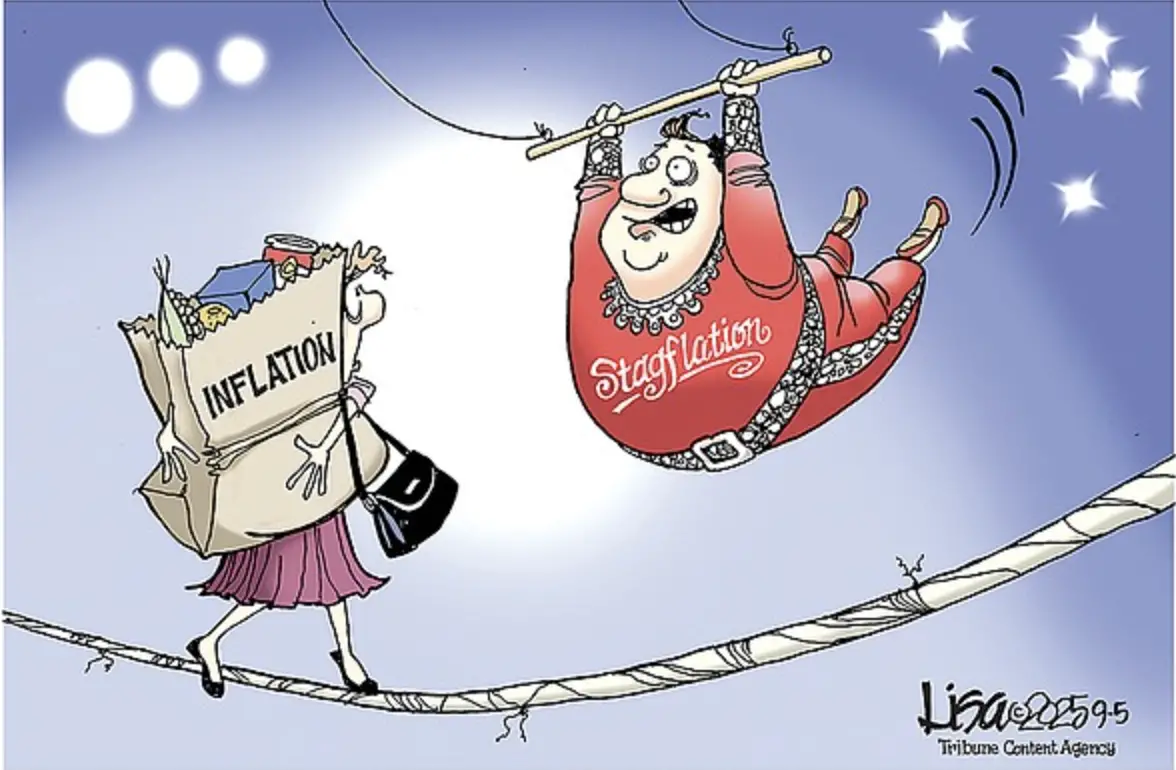
Debit: On the other hand, there are far bigger problems out there than the status of the US manufacturing base. Perhaps the most concerning at the moment is the latest jobs report from the Bureau of Labor Statistics, which confirms that the US is now officially suffering from stagflation – which we haven’t seen since the 1970s – thanks to contracting employment coupled with surging inflation. (Yes, even after the BLS gamed the numbers with their fraudulent “birth-death model” numbers.) Oh… and if you look under the hood, you’ll see that full-time positions have been declining for 6 of the past 7 months. Yeah… nothing to see here, folks. Besides, the stock market continues hitting new all-time highs. Magic!
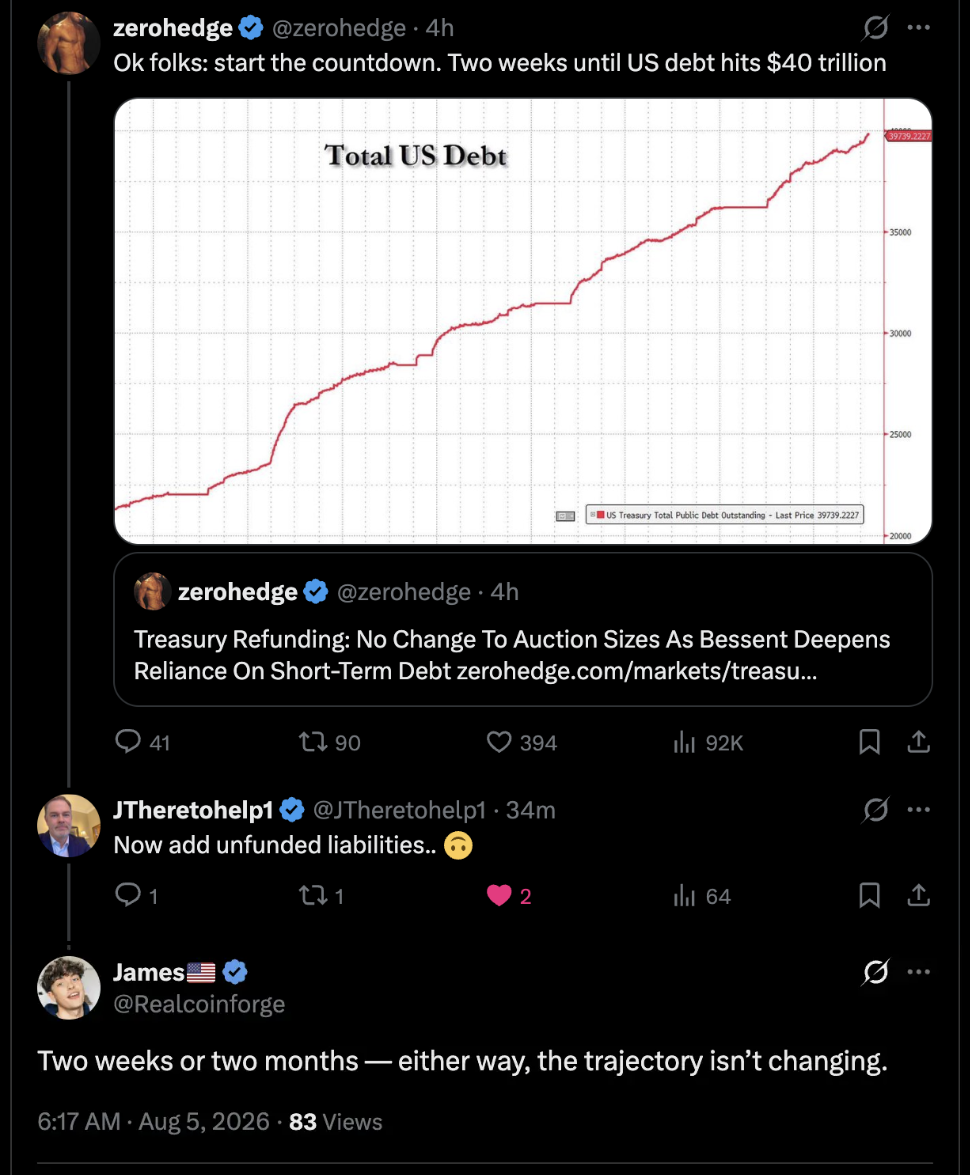
Debit: Then again, that stagflation is primarily being driven by government debt – which only continues to get worse. And while we routinely remind you of the National Debt problem we are dealing with here in the US, that fast-approaching $40 trillion financial millstone around America’s neck pales in comparison to the global debt time bomb, which is fast approaching $355 trillion. No, really. The good news is, this can be managed. (Until it can’t…)
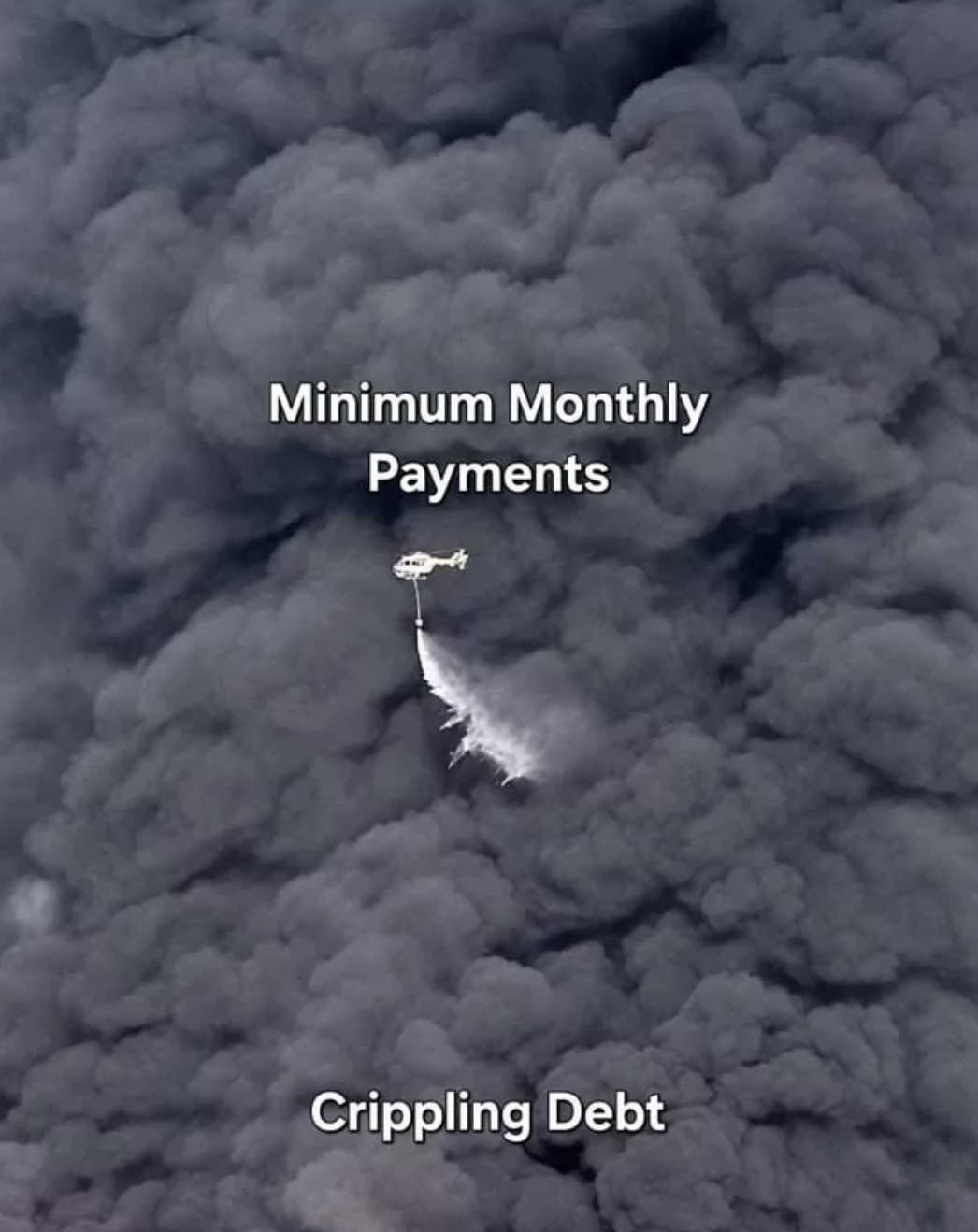
Debit: Meanwhile, in Japan, which currently has a debt-to-GDP ratio that is nearly twice the US’s alarming ratio, more than one-quarter of its government spending is now being consumed to pay for past borrowing. And the debt service is now spiraling out of control as the Bank of Japan (BoJ) is being forced to raise interest rates – and therefore, the cost of debt service – in a desperate attempt to save its currency (the yen). This is how all sovereign debt crises eventually start. The trouble is, eventually, central banks will have to choose between crashing their economies or destroying the remaining purchasing power of their currencies – even if they refuse to admit it.
Credit: Back in the US, the Fed continues to hint that it may – may – raise interest rates in September to bolster the USD and tame rising prices here in America. But the US has its own budding debt service issues; as such, we think they’re bluffing. But even so, as the sagacious macro analyst Franklin Sanders points out, “Y’all realize that long-term it doesn’t make a hill of beans difference what the Fed does with rates because they’re inflating the USD and will keep right on destroying it. There’s no way out but an eventual bust.” Truer words have never been spoken. Unfortunately, the mainstream media doesn’t understand this. As a result, neither does the general public.

h/t: @Durango773
Credit: Of course, as macro analyst Martin Armstrong notes, when it comes to currency crises, “Japan will be the first domino to fall because it pushed modern monetary experimentation further than any other major economy. It normalized zero and negative interest rates, allowed its central bank to dominate the government bond market, and assumed domestic savings would finance public deficits forever. Europe and the US followed the same path later, believing they could avoid Japan’s fate.” The key word there is “could.” Still, most people prefer dancin’ around reality…
Debit: As for how sovereign debt crises end, well… as the BoJ is finally beginning to find out, it’s not pretty. Unfortunately, most Japanese citizens won’t figure things out until it is far too late. Suffice to say that those who fail to protect their hard-earned long-term savings accumulated over a lifetime of working will see the purchasing power of their nest eggs greatly diminished, if not completely evaporated. And history has proven since time immemorial that physical precious metal held in your possession is the most reliable way to insure wealth. Got gold?
By the Numbers
With individual health insurance premiums rising significantly in recent years, a new study analyzed average premiums in each of the 50 states, then compared it to the median household income in order to shed light on where Americans are struggling the most to stay covered. With that in mind, here are five US states where Americans are shelling out the most – and least – for health insurance.
50 Maryland (4.7% of income)
49 New Hampshire (4.8%)
48 Massachusetts (5.5%)
47 Virginia (5.8%)
46 Minnesota (5.9%)
5 Mississippi (14%)
4 Arkansas (15%)
3 Wyoming (17%)
2 Vermont (19%)
1 West Virginia (21%)
Source: WalletHub
Last Week’s Poll Results
How much cash do you have in your wallet or purse right now?
- $11 to $50 30%
- More than $100 29%
- $51 to $100 26%
- $10 or less 16%
More than 2700 Len Penzo dot Com readers responded to last week’s question and it turns out that 5 in 9 of you were carrying more than $50 in your purse or wallet at the time. Way to go, big spenders! 😉
If you have a question you’d like me to ask the readers here, send it to me at Len@LenPenzo.com and be sure to put “Question of the Week” in the subject line.
The Question of the Week
Useless News: Dead Duck
A woman brought her very limp pet duck, Cuddles, into a veterinary surgeon.
As she laid her beloved duck on the table, the vet put his stethoscope to the bird’s chest and listened carefully.
A moment later the vet shook his head and said sadly, “I’m really sorry, ma’am — but Cuddles has passed away.”
The woman became quite distressed and began to cry.
“Are you sure?” she said with tears flooding from her eyes.
“Yes ma’am,” the vet responded, “Your duck is definitely dead.”
“But how can you be so sure?” the woman protested. “I mean, you haven’t done any testing on him or anything have you? Perhaps he’s just stunned or in a coma or something.”
The vet rolled his eyes, then turned around and left the room.
A few minutes later he returned with a black Labrador retriever.
As the duck’s owner looked on in amazement, the Labrador stood on his hind legs, put his front paws on the examination table and sniffed around the duck from top to bottom. He then looked up at the vet with sad eyes and shook his head.
The vet patted the dog on the head and took it out of the room.
A few minutes later the vet returned with a cat. The cat jumped on the table and delicately sniffed the bird from its head to its webbed feet. After a moment the cat looked up, shook its head, and meowed softly. The vet nodded solemnly to the feline, which then jumped off the table and sauntered out of the exam room.
The vet then looked at the woman and said, “Look, ma’am; I’m really sorry, but as I said before, this is most definitely a duck that is no longer of this world. Cuddles is dead.”
The vet then turned to his computer terminal, hit a few keys and produced a bill, which he handed to the woman.
Still in shock, she looked at the bill and saw it was $150. Incredulous, she shouted, “What??? You want $150 just for telling me that my duck is dead?”
The vet shrugged his shoulders and said, “I’m really sorry, ma’am. If you had taken my word for it, the bill would’ve only been $20 — but the lab report and cat scan isn’t cheap.”
(h/t: Cowpoke)
Squirrel Cam (After Dark)
The other night we got a visit from Poppy the possum….
.
Buy Me a Coffee? Thank You!
For the best reading experience, I present all of my fresh Black Coffee posts without ads. If you enjoyed this week’s column, buy me a coffee! (Dunkin’ Donuts; not Starbucks.) Thank you so much!
.
More Useless News
Hey, while you’re here, please don’t forget to:
1. Subscribe to my weekly Len Penzo dot Com Newsletter!
2. Make sure you follow me on follow me on X. And last, but not least…
3. Please support this website by purchasing my book! Thank you!!!! 😊
Letters, I Get Letters
Every week I feature the most interesting question or comment — assuming I get one, that is. And folks who are lucky enough to have the only question in the mailbag get their letter highlighted here whether it’s interesting or not! You can reach out to me at: Len@LenPenzo.com
This week Claire dropped the following question into the Len Penzo dot Com mailbox:
I have $18,000 in credit card debt and $110,000 in school loans. I’m earning $52,000 a year. Any advice on the best way to erase these loans quickly?
Yes! Ask your boss for a really REALLY big raise.
If you enjoyed this edition of Black Coffee and found it to be informative, please forward it to your friends and family. Thank you! 😀
I’m Len Penzo and I approved this message.
Photo Credit: public domain
Happy Saturday, Len! Question: Do you suppose most folks on Capitol Hill know the dollar is devalued every time the Fed prints more money, and if so, why are they still financing so many other nations in so many ways (just read today about us giving $1 billion in assistance to Columbia’s new Gov’t)? Shouldn’t they be doing what we NORMAL folks do, and trying to trim the budget everywhere they can?
Also that joke about the dead duck; insert eye-roll here…
Enjoy your week, everyone! 🙂
Hi Lauren! I think most of our Congressional representatives understand that they are devaluing the USD with every program that sends the US into a fiscal deficit, but they don’t care. I think only a handful understand that the problem with the US economy is that it is in the latter stage of a five-decade-old doom-loop caused by the USD’s anchor to gold being broken – and as such, the only way to fix things is to sharply devalue the USD even further with respect to the yellow metal (good, but only a temporary fix) or restore the USD’s gold anchor (better, but least likely as it effectively keeps government spending under control).
Until/unless one of those paths are chosen, our standard of living will continue to erode and young people will find it increasingly difficult to make ends meet, let alone buy a home.
And, yes, both of those alternatives will cause significant short-term pain – but it has to be done, or the shift towards more and more radical political candidates will continue.